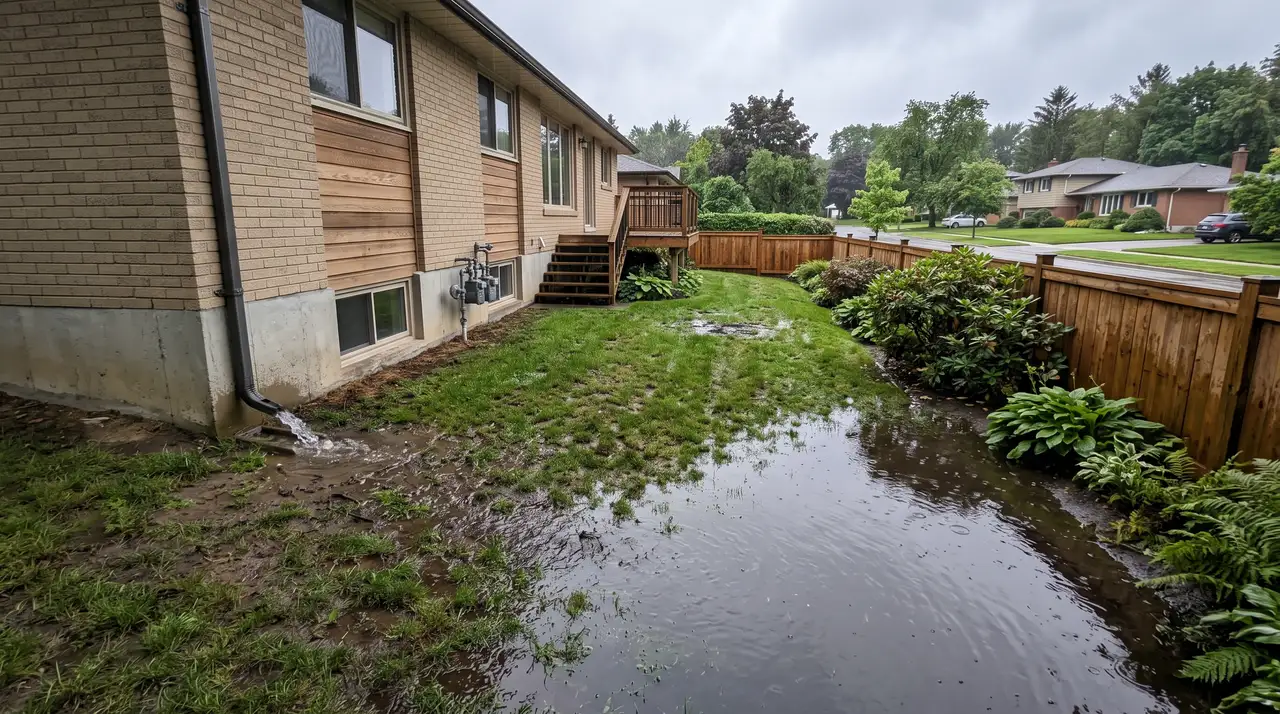
Standing water in the yard, or water entering the basement, house, or business?
-
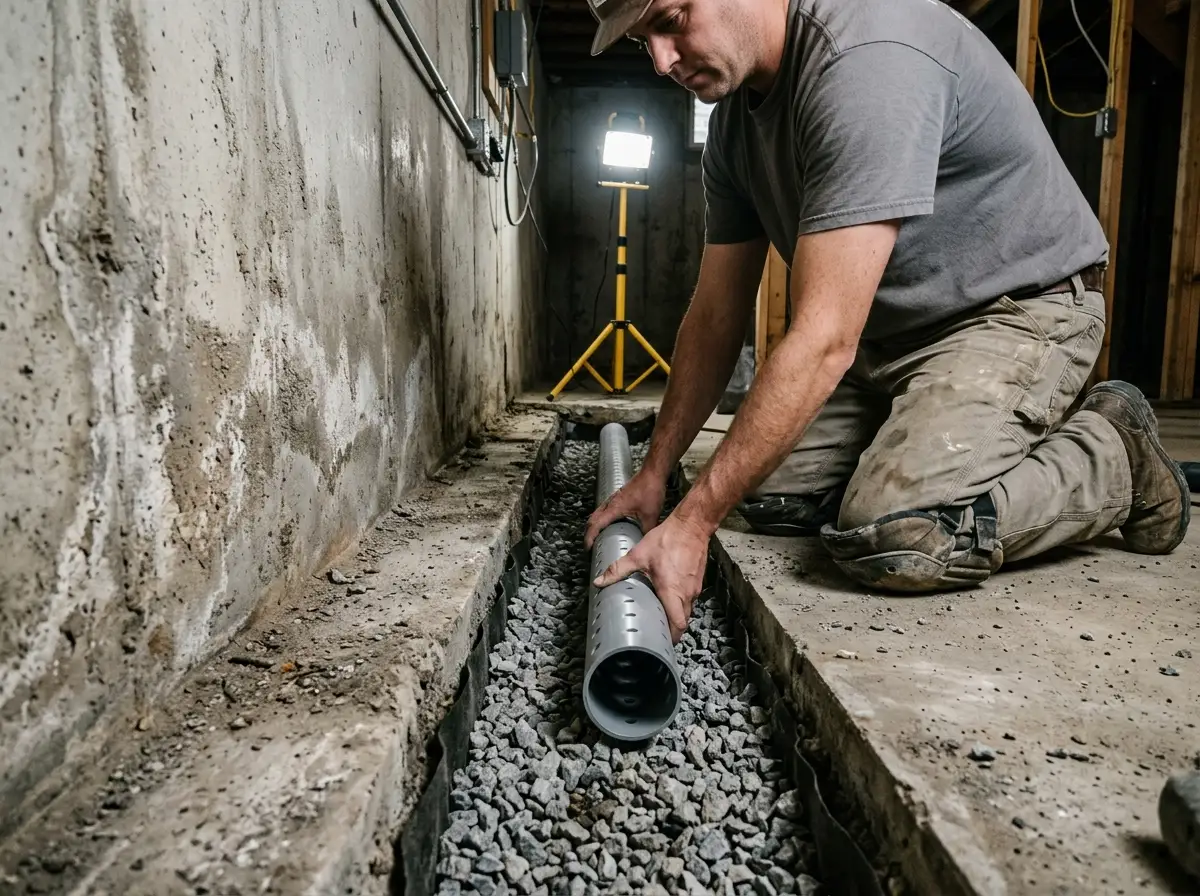
Basement Waterproofing and Interior French Drain
An interior French drain breaks the slab edge along the basement wall, sets a perforated pipe beside the footing, and sends what it catches to a sump pump that lifts it outside.
-
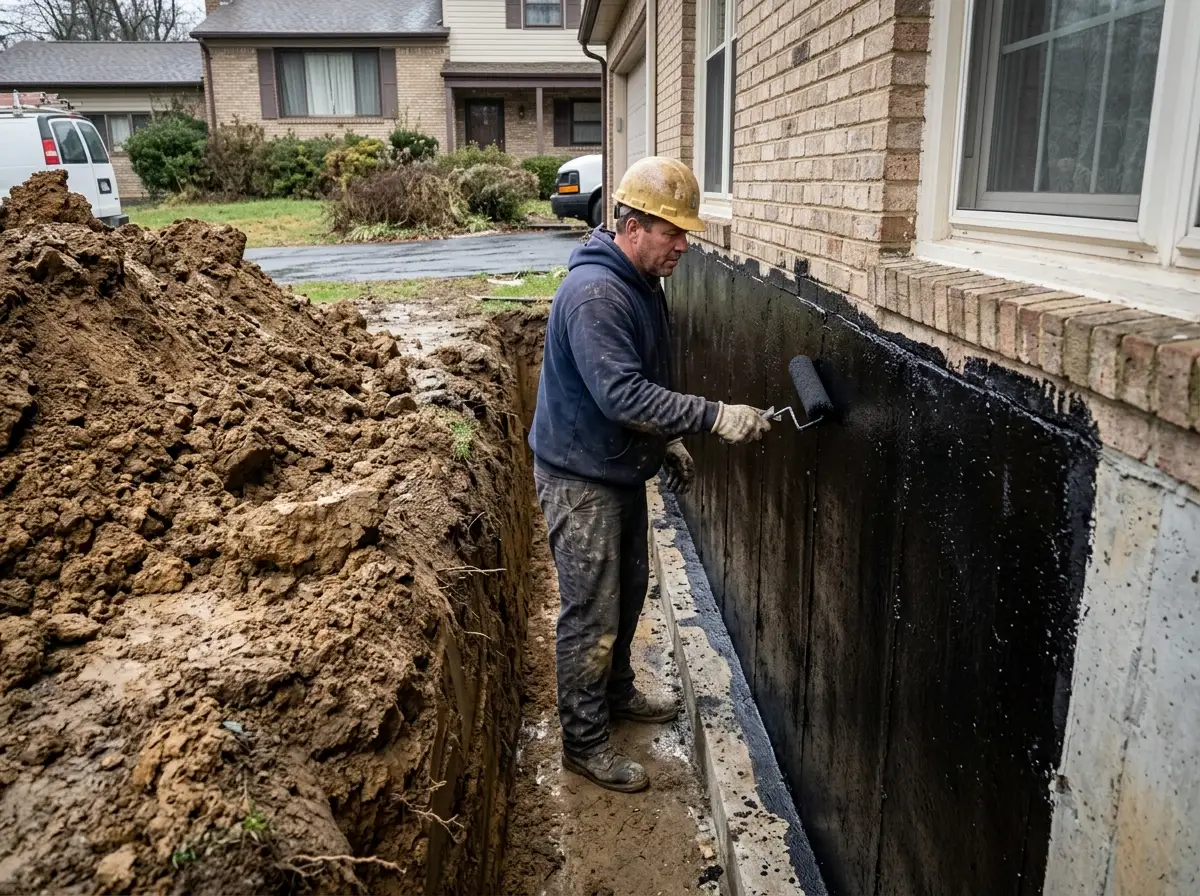
Exterior French Drain and Waterproofing
An exterior French drain excavates to the bottom of the outside basement wall, coats the wall with a waterproof sealant, and lays a gravel-filled drain at the footing to carry water away before it touches the concrete.
-
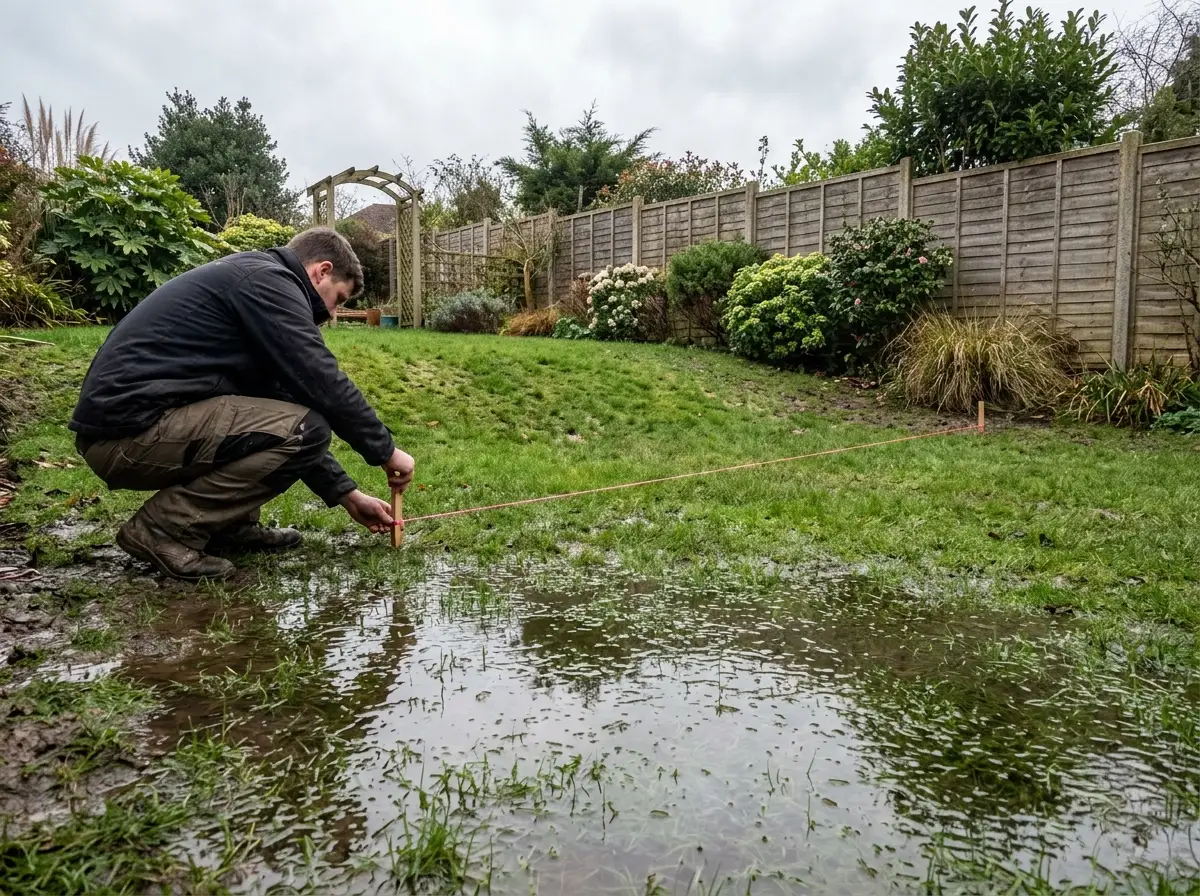
Yard and Lawn Drainage
Water standing on a lawn either has nowhere lower to go, cannot soak into the ground it is sitting on, or is arriving faster than both.
-
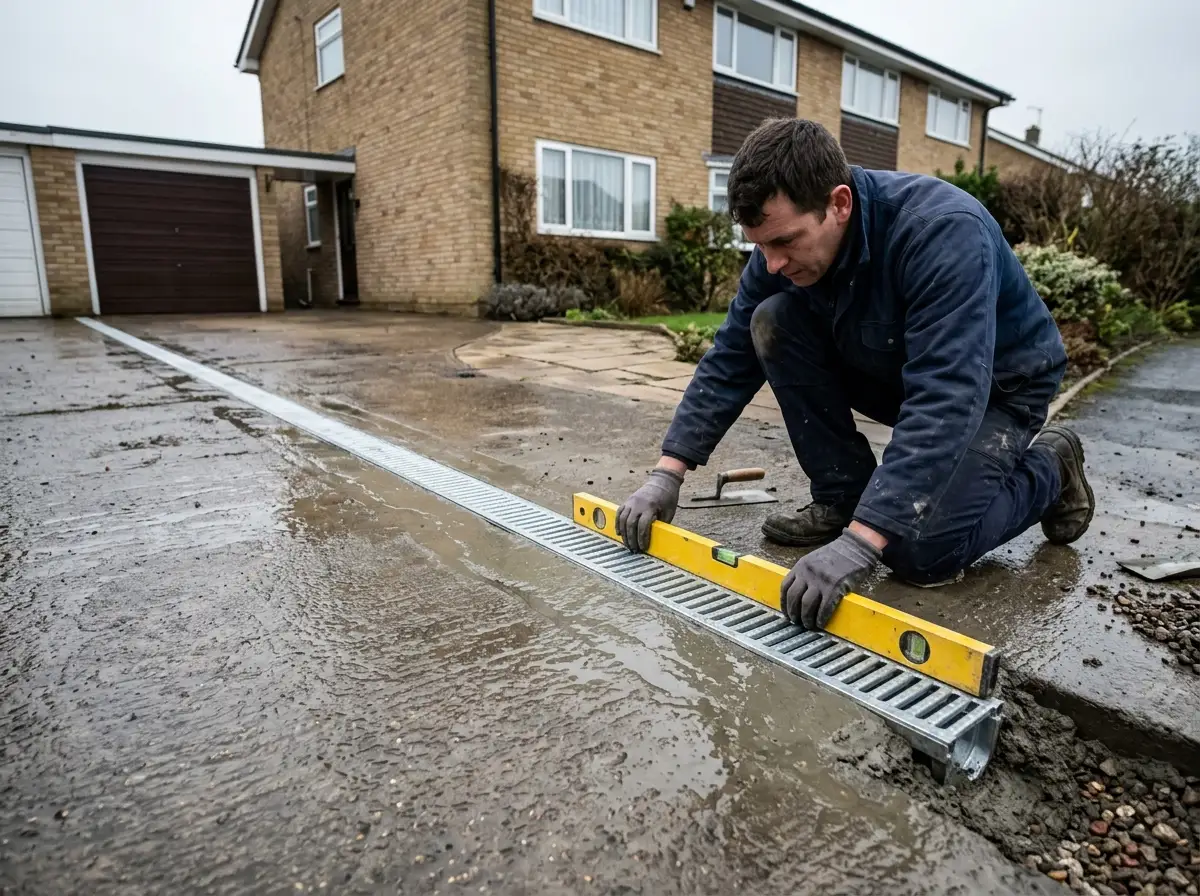
Driveway and Garage Drainage
Water reaching a garage door is either sheet flow running down the paving, or roof water that was put on the paving by a downspout.
-
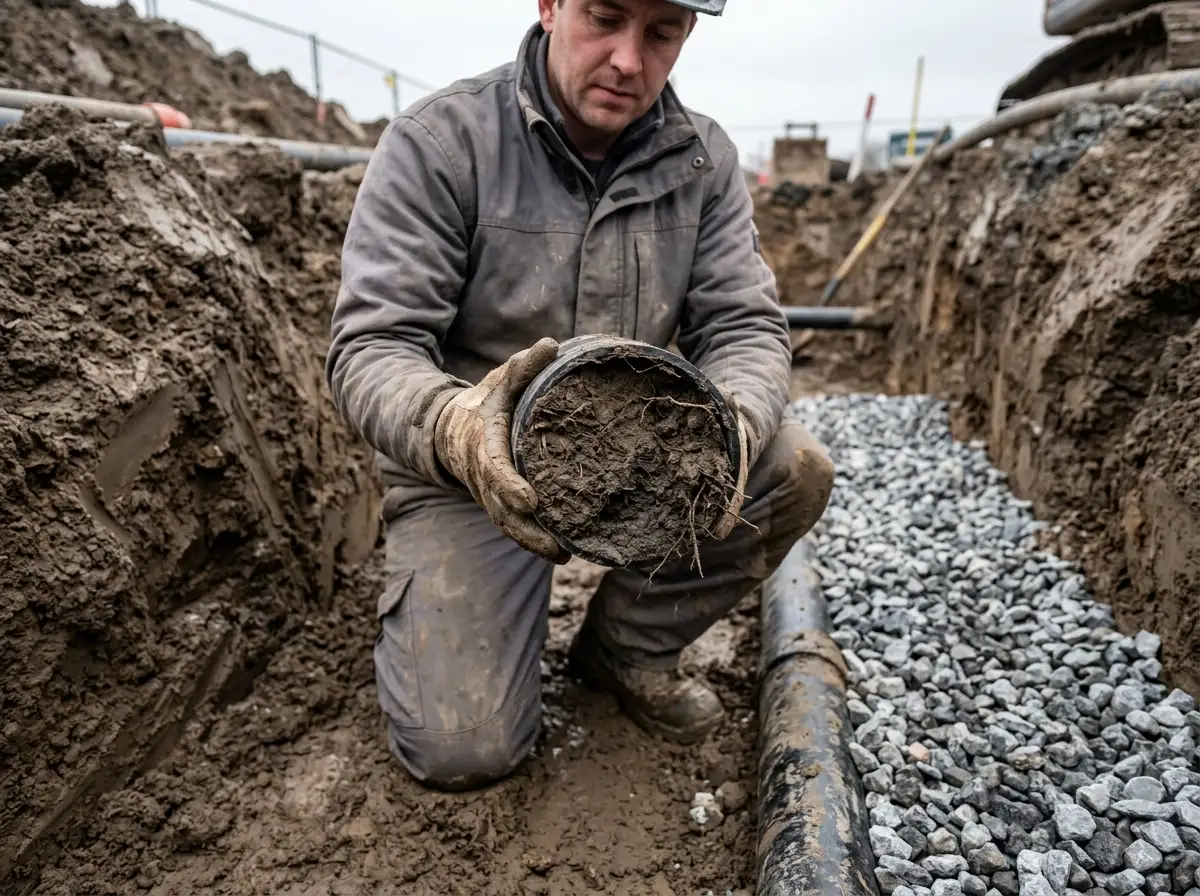
French Drain and Sump Pump Repair
A drain that has stopped is silted, root-bound, or crushed, and a pump that has stopped is a switch, an impeller, a valve, or a blocked discharge. Each has a different price.
-
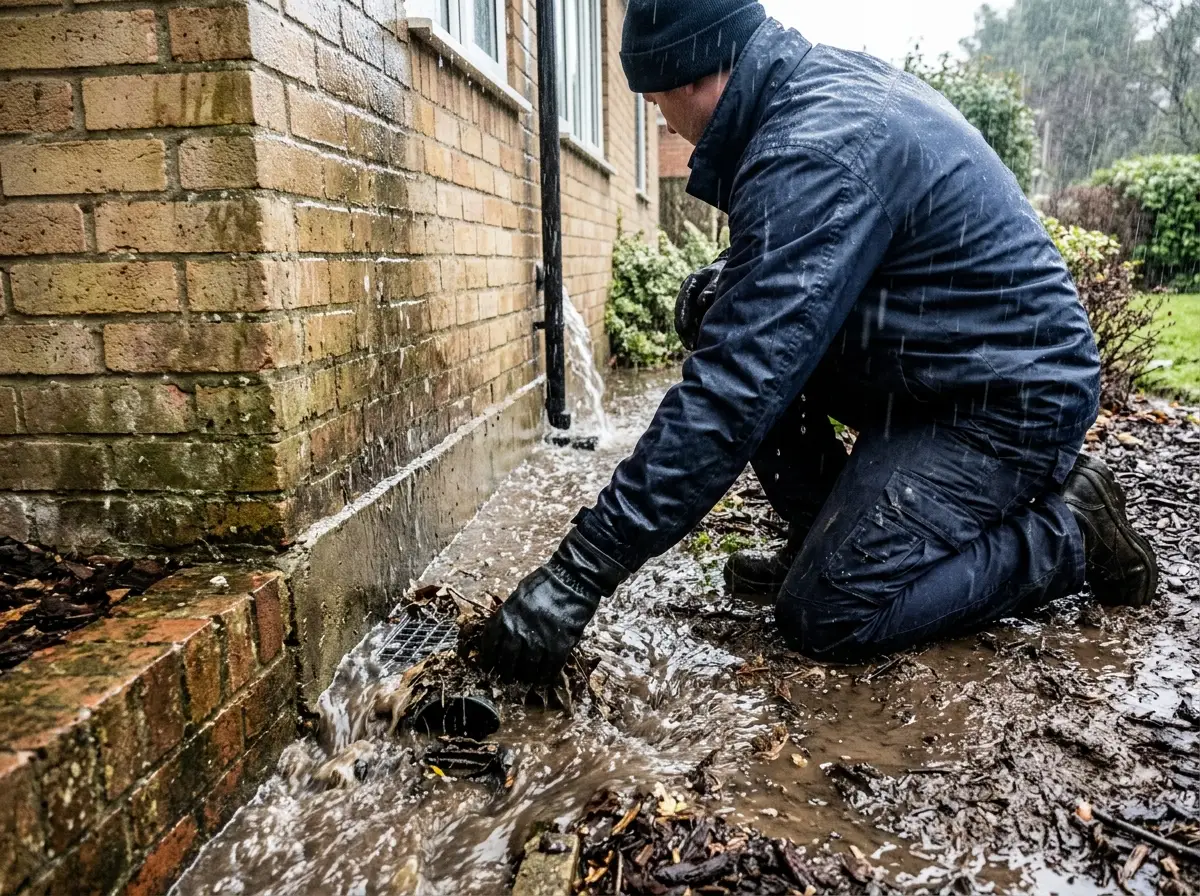
Emergency Drainage
Getting standing water away from a structure while it is still happening, then finding why it arrived. Those are two different jobs.
-
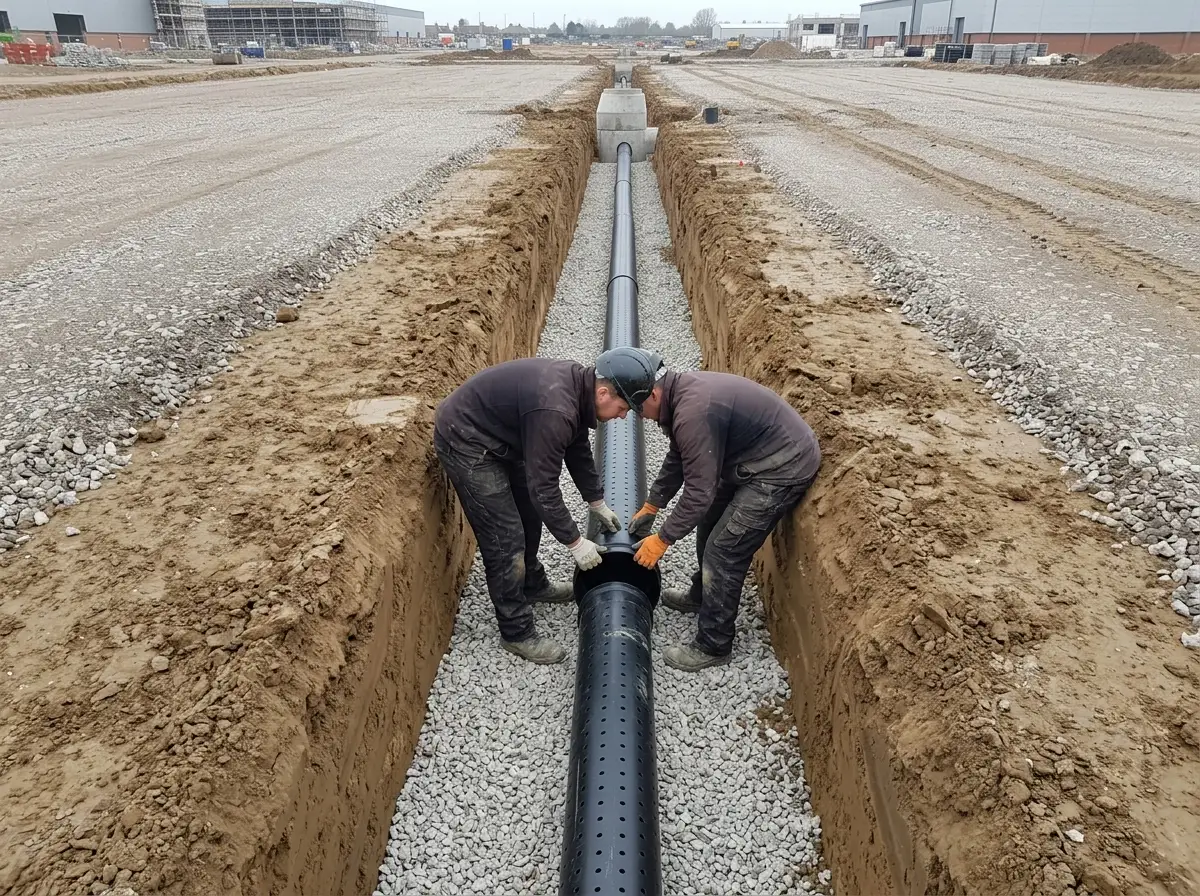
Commercial Drainage and Site Excavation
Drainage for a surface large enough to shed nearly everything that lands on it, where volume, grate loading and permitted discharge are all different questions than they are on a house.
Trusted across Layton, Utah and Davis County
What this site is good for
-
Residential and commercial
A house with a wet basement and a site with standing water on a hardstanding are different jobs at different scales. Both are covered, and the pages say which is which.
-
Free, and nothing attached
Working out which job you actually have costs nothing and commits you to nothing. There is no fee to you at any point, because this site is paid by the contractor and not by you.
-
Your details are not for sale
An address sent here goes to a drainage contractor working in the area. It is never sold, and never passed to a second firm.
-
Permits named, not glossed
The pages name the authority that issues the permit for this work and the inspection that goes with it, so you can ask to see one before the first cut.
-
Every figure sourced and dated
Soil, rainfall and housing figures each name where they came from and when they were retrieved. Where a published estimate carries a margin of error, the margin is shown too.
-
One town, covered properly
This site is about one place and the towns within a short drive of it. It is not a national directory with a city name dropped into a template.
-
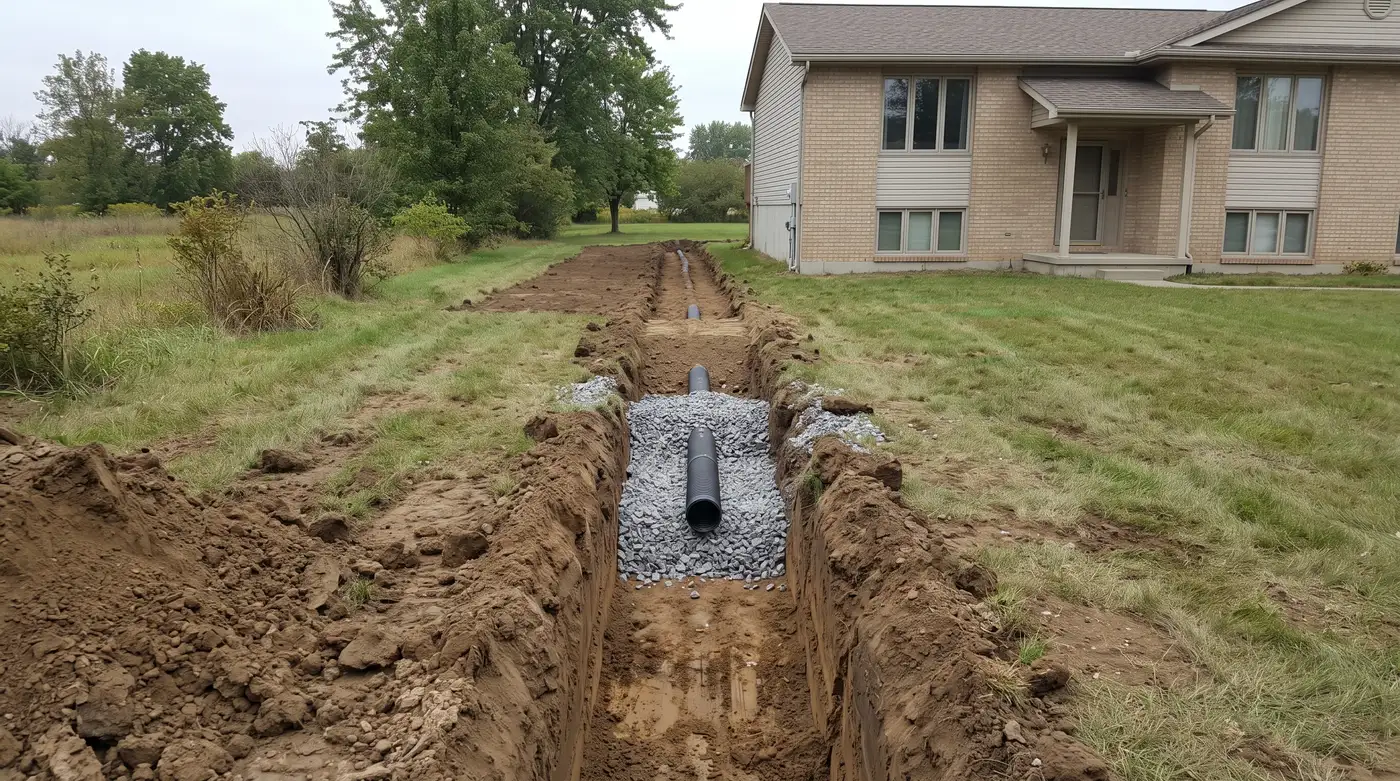
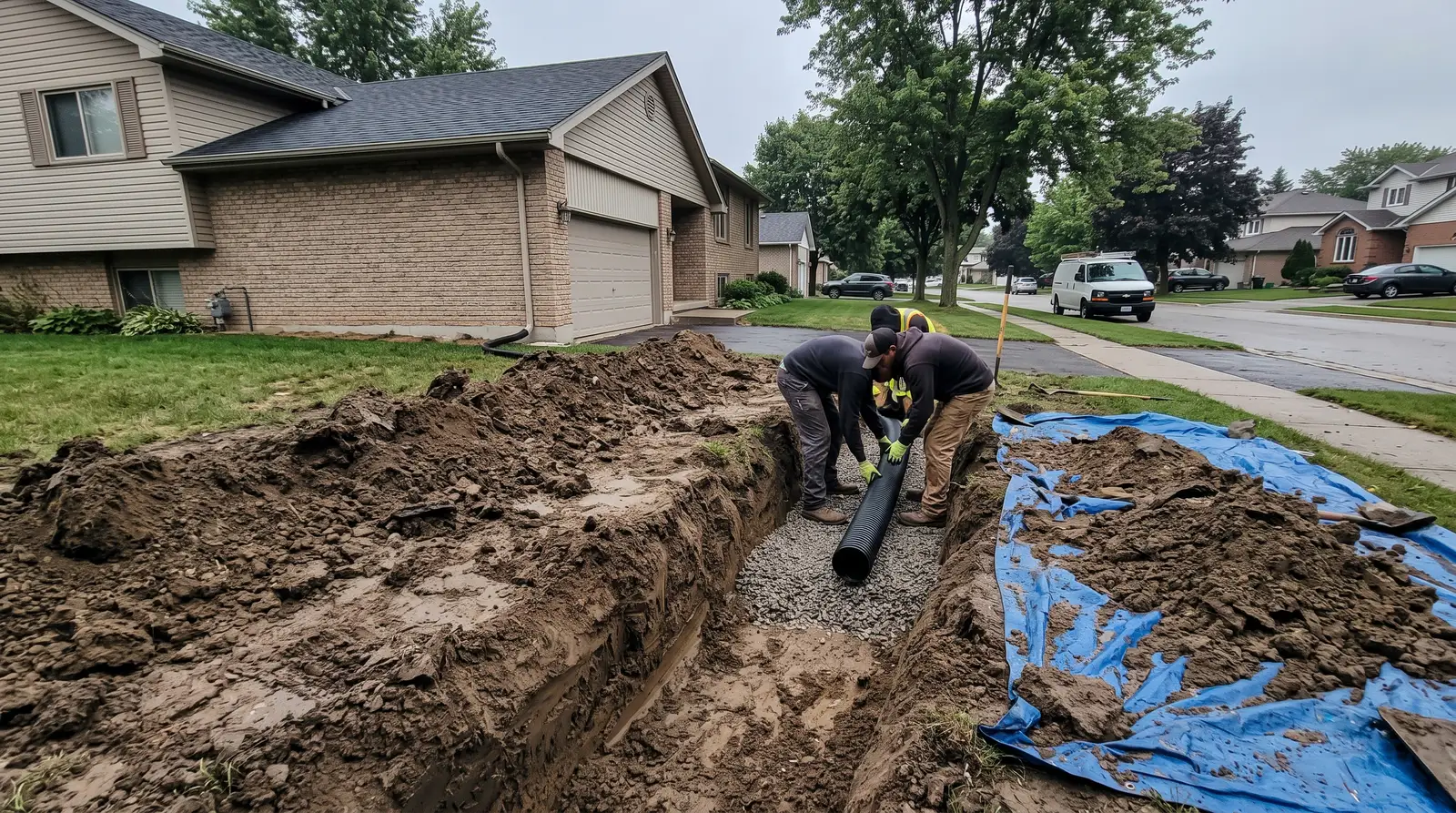
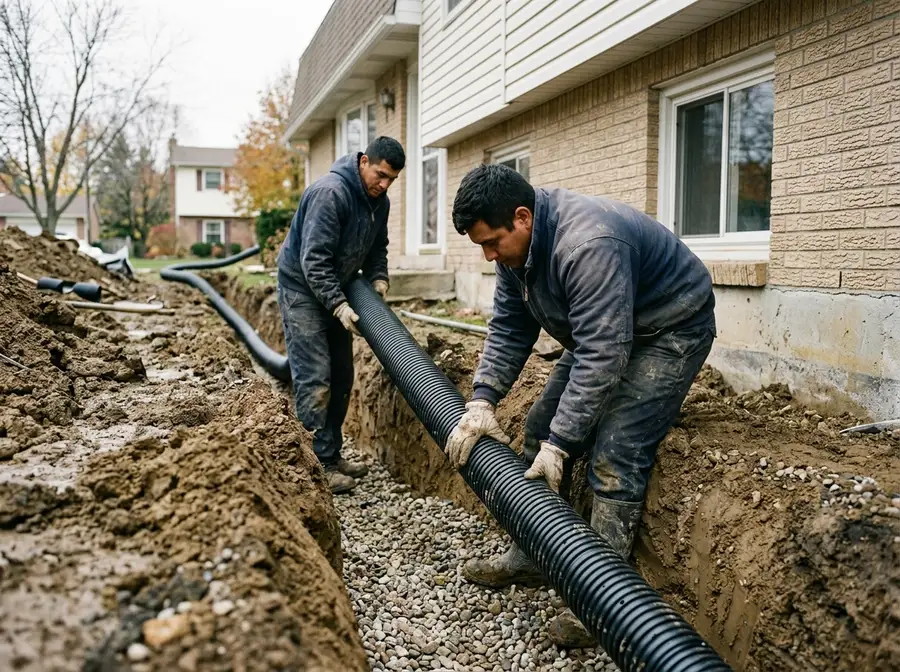
One run at four stages. The stone is the drain; the pipe is only how the water it collects gets out. -
Water standing at grade. Ground that sheds rather than takes is what puts it there. -
Pipe seated on the stone bed. Trench walls cut clean, so no soil falls back into the stone.
How an estimate and the work actually happen
-
Site Assessment
Where the water arrives, where the ground falls, and whether there is anywhere lower it may legally be sent.
-
Permit Check
Which of the work needs an application, and whether the discharge point is inside the property line or past it.
-
Excavation
The trench cut to line and fall, a bed of washed stone laid in it, and the pipe seated on the stone rather than on soil.
-
Backfill and Restore
Stone closed over the pipe, the filter layer kept clean of soil, and the surface put back the way it was found.
What the ground under Layton does
If Your Layton House Went Up Around 1993, The Water Is Probably Not Coming Through The Wall
The middle home in Layton was built in 1993, so this describes a lot of houses here. Houses of that age sit on poured walls rather than block, and they were graded to shed water when they went up. When water turns up two decades later, something changed after the build. A downspout that ends too close to the wall. A patio poured to the wrong slope. Soil that settled against the footing and now falls the wrong way.
That matters because it points at the cheap fix first. A block wall leaks through the joints and the wall itself has to be treated, which is the expensive version. A poured wall of this age usually fails at the grade instead, and grade work happens outside for a fraction of the cost. Walk the ground within 6 feet of where the water shows up before you price anything.
A contractor who opens with an interior system on a house this age is selling you the expensive version of a different problem. Ask what they found outside first.
Some Layton Yards Sit On Ground That Sheds Water Instead Of Taking It
The USDA has mapped the soil under this city. It sorts soil into four groups by how fast water moves down through it. Group A is sand and it drains. Group D holds water at the surface. Measured against the city limits, 46 percent of Layton is group C or D.
That is the short answer to why yards flood here. Rain does not soak in fast enough. It runs, or it sits.
A further 54 percent of Layton is group A or B — ground that drains on its own. That share matters more than it sounds. On that ground a drain often solves nothing, because the water was already leaving. If your yard clears within a day of a storm, look at your downspouts and your grade before you price a drain.
Soil is mapped by the acre, not by the lot. Your yard can differ from the map under it. Dig a hole a foot deep, fill it with water, and time how long it takes to drop. That test beats any map.
A Layton Drain Is Sized Against A Storm, Not Against A Year
The National Weather Service publishes what a storm drops here, and it is the number a drain is actually built to carry.
In Layton, a two-year storm drops 1.69 inches of rain in a day. That is the storm you get most years. A ten-year storm drops 2.29 inches. A hundred-year storm drops 3.25 inches.
Those numbers are low next to most of the country, and that is the point. This is a dry place with a wet-yard problem. The trouble is not how much rain falls. It is that the ground cannot take the little that does.
So a drain here is not built for a downpour. It is built to move a slow inch off ground that will not absorb it. Ask anyone quoting you a system which storm they sized it for. A shrug is an answer.
What the work actually is
A French drain is a trench, a perforated pipe, and clean stone around it. Water in the soil finds the pipe because the pipe is the easiest path. The pipe carries it somewhere it can do no harm. That is the whole idea.
Three things decide whether it works. Where the water starts. Where it can be sent. How much fall there is between the two. If the yard is flat and there is nowhere downhill to send it, a drain alone will not help, and a sump is part of the answer instead.
Standing water in the yard
Water sitting on the surface after rain, or a low spot that stays soft for days. This is a surface problem. The fix is usually a shallow drain, 18 to 36 inches down, or regrading so the ground falls away from the house. It is the cheaper of the two problems here, and the one most likely to need no drain at all.
Water entering the basement
Water at the floor edge, a damp line along the wall, or a puddle after a storm. This is the footing’s problem, not the lawn’s. A drain that relieves a footing sits beside it, which on a full basement is 7 to 8 feet down, so it costs more than any yard drain. It is also the one where the cheap fix works often enough to check first.
What each of these jobs is
Basement Waterproofing and Interior French Drain. An interior French drain breaks the slab edge along the basement wall, sets a perforated pipe beside the footing, and sends what it catches to a sump pump that lifts it outside. Basement Waterproofing and Interior French Drain in Layton, UT.
Exterior French Drain and Waterproofing. An exterior French drain excavates to the bottom of the outside basement wall, coats the wall with a waterproof sealant, and lays a gravel-filled drain at the footing to carry water away before it touches the concrete. Exterior French Drain and Waterproofing in Layton, UT.
Yard and Lawn Drainage. Water standing on a lawn either has nowhere lower to go, cannot soak into the ground it is sitting on, or is arriving faster than both. Yard and Lawn Drainage in Layton, UT.
Driveway and Garage Drainage. Water reaching a garage door is either sheet flow running down the paving, or roof water that was put on the paving by a downspout. Driveway and Garage Drainage in Layton, UT.
French Drain and Sump Pump Repair. A drain that has stopped is silted, root-bound, or crushed, and a pump that has stopped is a switch, an impeller, a valve, or a blocked discharge. Each has a different price. French Drain and Sump Pump Repair in Layton, UT.
Emergency Drainage. Getting standing water away from a structure while it is still happening, then finding why it arrived. Those are two different jobs. Emergency Drainage in Layton, UT.
Commercial Drainage and Site Excavation. Drainage for a surface large enough to shed nearly everything that lands on it, where volume, grate loading and permitted discharge are all different questions than they are on a house. Commercial Drainage and Site Excavation in Layton, UT.
Choosing between two of them
Two questions come up often enough to have their own pages, and both are decided by the site rather than by preference. Interior vs Exterior French Drain in Layton, UT. French Drain vs Sump Pump in Layton, UT.
Not sure which of those it is?
The pages above are sorted by what you can see, not by what a contractor would call it. If none of them is obviously yours, the index lists every job a Layton lot might need and what each one is the answer to. Drainage Services in Layton, UT.
Questions people ask before they call
Most of what decides a drainage job is decided by the ground under one particular house, which is why a general answer is only ever half of one. The questions below are answered here twice over: what the general answer is, and what it means on Layton ground. French Drain Installation Questions — Layton, UT.
Read how a Layton Utah French Drain estimate works for the six steps from an address to a written quote. See About Layton Utah French Drain for the arrangement in full, including what this site is not.
When not to buy one
Water on the floor after a heavy rain, near one wall, with a downspout outside it. Fix the downspout first. Water that seeps through a wall in a wet spring and never in summer. Look at the grade first. A drain installed around either of those is money spent on the wrong cause.
Two checks worth making before anyone quotes you.
- Extend the downspouts. A roof outlet should discharge at least 6 feet from the wall, and 10 is better. One downspout can put hundreds of gallons against a footing in a single storm, and an extension costs a small fraction of a drain.
- Fix the slope. The ground in the first 10 feet should fall away from the house, about 6 inches over that distance. Where it falls toward the house instead, water is being delivered to the wall on purpose.
If either is wrong, correct it and watch one more storm before spending anything larger.
Read what a Layton drainage job costs before calling anyone, and check the Layton Utah French Drain service area to see whether your street is covered.
Rather talk it through?
(385) 492-6658One call about which drainage job you actually have in Layton, before anyone quotes you for one.
Or send your address insteadWhere we cover
14 miles from Layton · no premises, no street address- Clearfield3.3 mi
- Kaysville3.4 mi
- Syracuse5.7 mi
- South Ogden6.6 mi
- Clinton6.9 mi
- Farmington7 mi
- Roy7.9 mi
- West Haven10.3 mi
- Ogden10.4 mi
- Centerville11.2 mi
The ground under Layton
Water sits on the surface instead of soaking in
46% of the city is on soil the USDA rates C or D
Hydrologic soil group is the USDA's summary of how fast water moves down through a soil. A and B drain; C and D shed. This is the share of mapped land area in those groups, measured against the city's Census boundary. Soil is mapped by the acre, not by the lot, so your yard can differ from the map unit under it.
USDA NRCS Soil Survey Geographic Database (SSURGO), via Soil Data Access
A drain on ground that already drains is money spent on nothing
54% is group A or B — ground that drains on its own
These soils take water down faster than a storm delivers it. On that ground a french drain usually moves water that was already leaving, and the money is better spent on the downspouts and the grade. This is the one figure on this page that argues against buying anything.
USDA NRCS Soil Survey Geographic Database (SSURGO), via Soil Data Access
In the wettest corners there is nowhere lower for the water to go
The shallowest mapped water table sits 29.9 inches down
A drain works by moving water somewhere lower. Where the seasonal high water table comes within a few inches of the surface, for part of the year there is nothing lower to move it to, and a drain dug into it will simply stand full. This is the shallowest value among the largest soils mapped here, not a typical one.
USDA NRCS Soil Survey Geographic Database (SSURGO), via Soil Data Access
Questions people actually ask
Will a French drain fix water in a Layton basement?
Sometimes, and often something cheaper will. A downspout should discharge at least 6 feet from the wall, and moving one costs a small fraction of a drain. A drain is the answer when water has nowhere to go, not when it is simply aimed at the house.
How deep does a French drain need to be?
It depends what it is protecting. A drain relieving a footing sits beside it, which on a full basement is 7 to 8 feet down. One intercepting surface water in a yard sits 18 to 36 inches. The depth is set by where the water is, not by a standard.
How much fall does a drain need to work?
About 1 inch every 8 feet — a 1 percent grade. Over a 60 foot run that is 7 to 8 inches of drop. Where a lot cannot supply it, gravity is not available and a pump is not a preference but the only option left.
When can a drain be dug in Davis County?
Frozen ground stops the work. The usual window runs about 8 months, opening once the frost is out and closing when it returns. Inside that window, book about 6 weeks ahead.
Who pulls the permit?
The trade doing the work pulls it in their own name. Expect 1 inspection on a residential trench, and ask to see the permit before the first cut. A contractor who suggests skipping it is telling you something about the rest of the job.
What kind of ground is under Layton?
The largest soil unit mapped here is hydrologic group C. The USDA sorts soil into four groups by how fast water moves down through it: A takes water fastest, and D holds it at the surface. Soil is mapped by the acre rather than by the lot, so one yard can differ from the map unit drawn under it.
USDA NRCS Soil Survey Geographic Database (SSURGO), via Soil Data Access · retrieved 2026-08-28
How old is the typical house in Layton?
The median year built is 1993. A house of that age was graded to shed water when it went up, so water arriving long afterwards usually points at something that changed outside — a downspout ending too close to the wall, a patio poured to the wrong slope, or soil settled against the footing.
US Census Bureau, American Community Survey 5-Year Estimates 2023 · retrieved 2026-08-28
What size of storm is a drain sized against here?
The ten-year, 24-hour design depth is 2.29 inches — the storm a private system is normally sized against, meaning one with a one-in-ten chance of being matched or exceeded in any given year. The National Weather Service publishes it with a confidence range, which is what makes it checkable rather than a rule of thumb.
NOAA Atlas 14 Volume 1 Version 5, Precipitation Frequency Data Server · retrieved 2026-08-28
Ground that is saturated has nowhere to put the next storm, and water sitting against a wall keeps working on it.
What happens after you send an address
-
The address first, and only then who you are
The first screen asks for the property address and checks that a contractor covers it. Only if one does does it ask for a name, a phone number and an email — there is no point taking your details to tell you nobody serves your street.
-
Your details are not for sale
It goes to a drainage contractor working in Layton. The details are never sold, and never passed to a second firm.
-
No cost, and nothing attached
There is no fee for sending an address and no obligation that follows from it. Deciding the work is the wrong work is a perfectly good outcome.
-
Who does the work
An independent drainage contractor, not the publisher of this site. Who runs this site, and where every figure on it comes from, is set out on the about page.